

01
Pure server-side flow
Initialize a transaction on your backend, get back an authorization URL, redirect the customer. No JavaScript SDK to load, no modal to manage - works on any page that can issue an HTTP redirect.
Checkout / Standard
ZevPay Standard is the redirect-style checkout. Build a payment URL with your API key + amount + email; send the customer there; they pay; we redirect back. No JS required on your side.
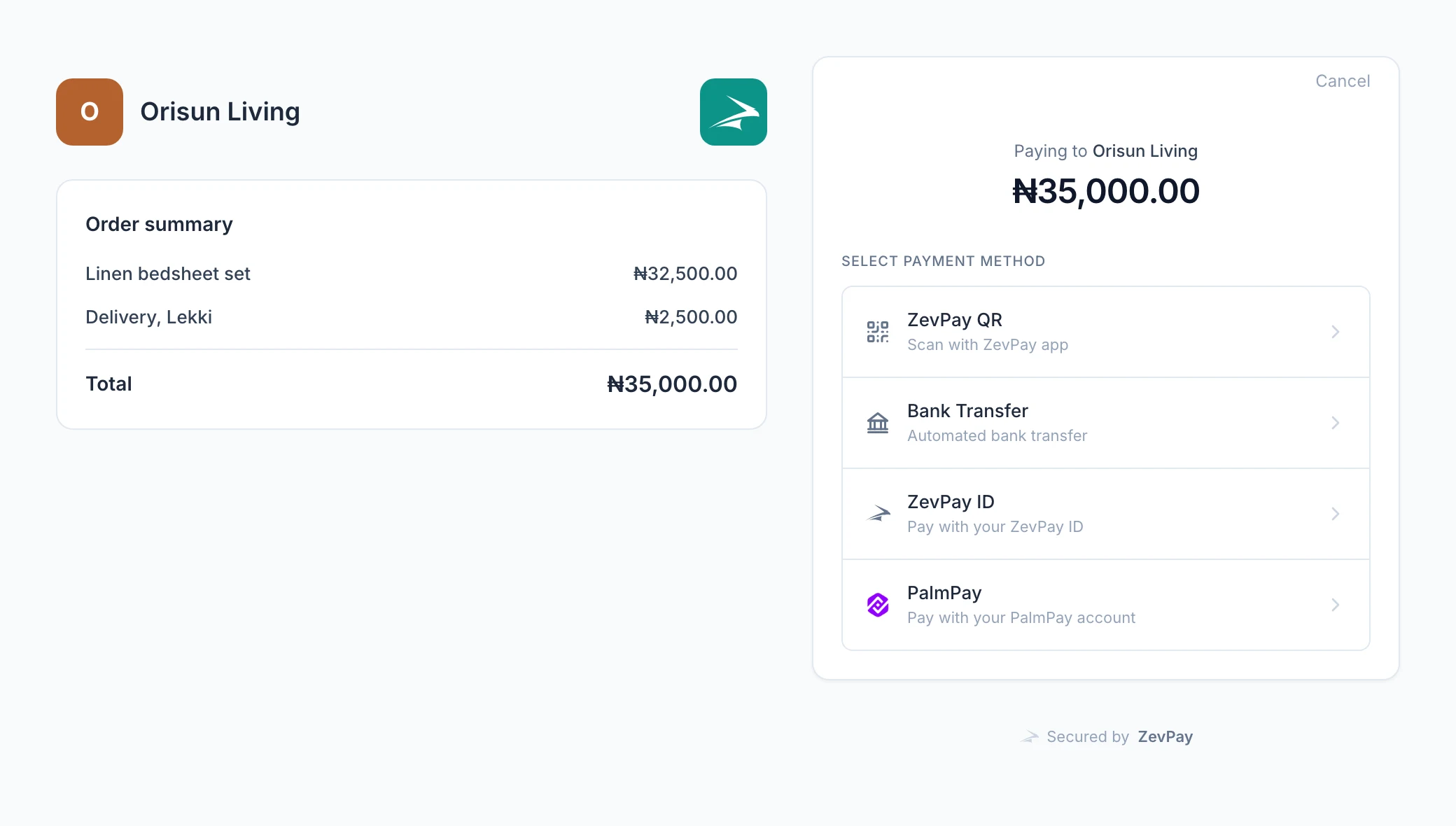
Initialize a transaction on your backend, get back an authorization URL, redirect the customer. No JavaScript SDK to load, no modal to manage - works on any page that can issue an HTTP redirect.
Perfect for static sites, WordPress installs without JS budget, sales pages built in tools that don't allow custom scripts. The integration is essentially: <form action="…">.
After payment, customer is sent back to your `callback_url` with the reference. Verify server-side with the standard verify endpoint or via webhook.
No premium for the hosted page. You pay the same per-payment rate whichever integration you use.
In code
The full happy path is short. You can swap real keys in and ship to staging today.
Full Standard reference# 1. create a session from your server
curl -X POST https://api.zevpaycheckout.com/v1/checkout/session/initialize \
-H "x-api-key: sk_live_…" \
-H "Content-Type: application/json" \
-d '{
"amount": 250000,
"currency": "NGN",
"email": "ada@acme.ng",
"reference": "ORDER-12345",
"callback_url": "https://acme.ng/return"
}'
# → { "success": true, "data": { "checkout_url": "https://secure.zevpaycheckout.com/…" } }
# Redirect, customer pays, returns. Confirm on your server by your own reference:
curl https://api.zevpaycheckout.com/v1/checkout/session/ORDER-12345/verify \
-H "x-api-key: sk_live_…"How it works
POST /v1/checkout/session/initialize from your server with your secret key, the amount in kobo and your own reference.
Send them to the checkout_url you got back. They pay on our hosted page.
Fulfil from the charge.success webhook, or verify the session by your own reference.
Perfect for
Plug-in installed, no theme edits, no JS budget needed.
Drop our app in, the checkout becomes one click away.
Landing pages, ad funnels, any static HTML - works out of the box.
Rails, Django, Laravel - backend redirect, no client JS dependency.
// payment methods
Standard offers the same methods as the other two: naira rails in Nigeria, mobile money across Africa and stablecoins from anywhere, in the customer's own currency.
Methods, currencies and marketsBank transfer
Nigeria · NGN
ZevPay ID & QR
Nigeria · NGN

PalmPay
Nigeria · NGN
CardComing back
Nigeria · NGN
Static NGN accountsOn request
Nigeria · NGN
Mobile moneyOpening market by market
Across Africa · mobile money
USDT & USDC
Worldwide · stablecoins
Common questions
Not yet. The hosted page is served from secure.zevpaycheckout.com, with your name, logo and colours.
GET /v1/checkout/session/{your reference}/verify with your secret key, or fulfil from the charge.success webhook. Never trust the return to your callback_url on its own.
Your business name, logo and colours are set in the dashboard, for the account or per API key. The page picks them up automatically.
The webhook still fires the moment we confirm payment. Backend reconciliation should be webhook-driven - callback is just for the customer's UX.
Standard integration
Add Standard to your existing stack with the same pk_ key you already use.